
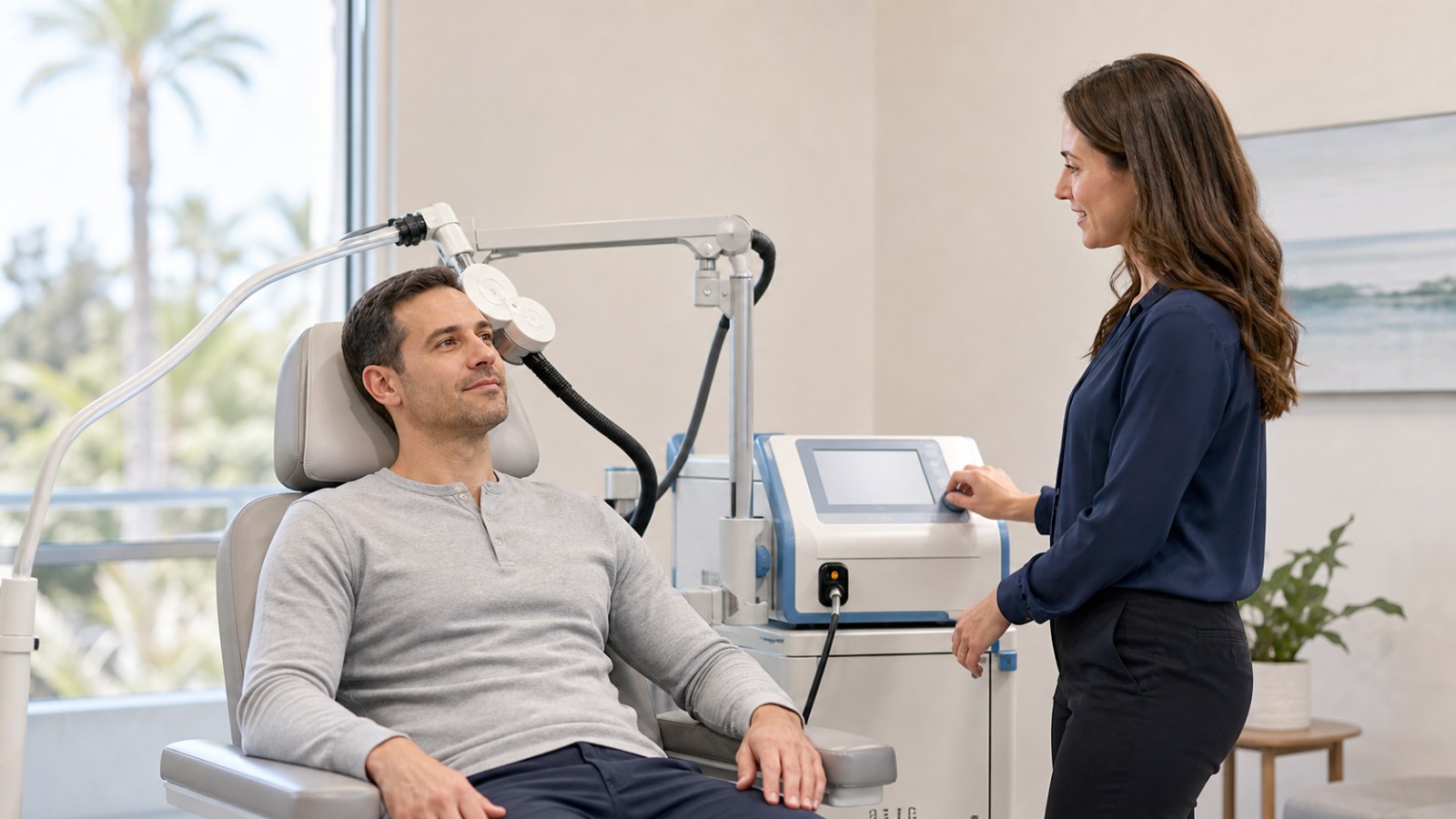
When depression continues to affect daily life, considering another treatment can bring both hope and uncertainty. Knowing what to expect can make the next step feel more manageable.
Transcranial Magnetic Stimulation (TMS) is a noninvasive outpatient option that may be considered for appropriate patients. A standard course includes an evaluation, an initial mapping or settings visit, repeated sessions, and regular progress checks.
This article focuses on the practical treatment experience. At Pacific Pain & Wellness Group, TMS evaluation is individualized around treatment history, safety considerations, and care goals. For PPWG-approved service information and appointment details, visit the TMS treatment page.
Before the first treatment
The care team reviews your diagnosis, symptoms, treatment history, medications, and relevant medical or neurologic history. Tell the clinician about seizures, head injury, pregnancy, implanted devices, or metal in or near the head. You may also be asked to complete a standardized symptom questionnaire so progress can be measured over time.
Mapping and treatment settings
At an initial visit, the clinician identifies the treatment position and determines individualized stimulation settings. You may feel tapping or movement in the scalp or face while the team makes adjustments. The coil position and settings are documented for future sessions.
During a routine session
You remain awake in a treatment chair while the coil delivers repeated magnetic pulses. The machine makes clicking sounds, so hearing protection is generally used. Scalp tapping, tingling, mild discomfort, or facial muscle movement can occur. Let the technician know if discomfort is difficult to tolerate or feels different from prior sessions.
Schedule and daily routine
Session and course lengths vary by protocol and device. Many standard rTMS courses involve weekday sessions over several weeks. Standard treatment does not generally require anesthesia, but follow the clinic's instructions about medications, caffeine, sleep, and other factors that could affect treatment or seizure risk.
How progress is reviewed
Improvement is not guaranteed and may not be immediate. The treatment team may repeat symptom measures, ask about daily function and side effects, and review whether the planned course remains appropriate. Report worsening depression, unusual mood changes, new neurologic symptoms, or other concerning effects promptly.
Planning your questions
Before treatment begins, ask which device indication and protocol are being recommended, how outcomes will be measured, what insurance authorization is required, and what alternatives will be considered if TMS does not help.
Take the next step with confidence
You do not have to decide whether TMS is right for you on your own. The Pacific Pain & Wellness Group team can review your treatment history, goals, and safety considerations and explain whether a TMS evaluation may be an appropriate next step.
Request an Appointment Call (310) 437-7399
If you or someone you know is in immediate danger, call 911. For suicidal thoughts or a mental health crisis in the United States, call or text 988.
Source
National Institute of Mental Health: Brain Stimulation Therapies
Educational information only. Treatment recommendations require an individual clinical evaluation.